Address
2949 Boundary Street
Jacksonville, FL 32202
Work Hours
Monday to Friday: 7AM - 7PM
Weekend: 10AM - 5PM
Address
2949 Boundary Street
Jacksonville, FL 32202
Work Hours
Monday to Friday: 7AM - 7PM
Weekend: 10AM - 5PM

Retractable and folding tonneau covers are the two most popular hard cover designs on the market, and they solve the same problem in fundamentally different ways. One slides into a canister. The other folds against the cab. Both protect your cargo, but the day-to-day experience of living with each design is surprisingly different. Here’s an honest breakdown to help you pick the right one for how you actually use your truck.
I’ve used both styles extensively on different trucks, and the thing that surprised me most is how much the design affects your daily routine. The cover you barely think about — the one that works with how you load and unload naturally — is the right one for you. The cover that makes you pause or adjust your behavior every time you need something from the bed is the wrong one, regardless of how many awards it’s won.
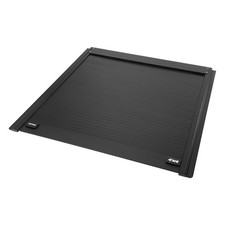


Choose a retractable cover if you value one-handed operation, want to lock the cover at any position, and can accept losing about 12 inches of bed space to the canister. Choose a folding cover if you want full bed access without losing cargo space, prefer a lower price point, and don’t mind manually flipping panels. Neither design is universally better — it depends on your usage pattern.
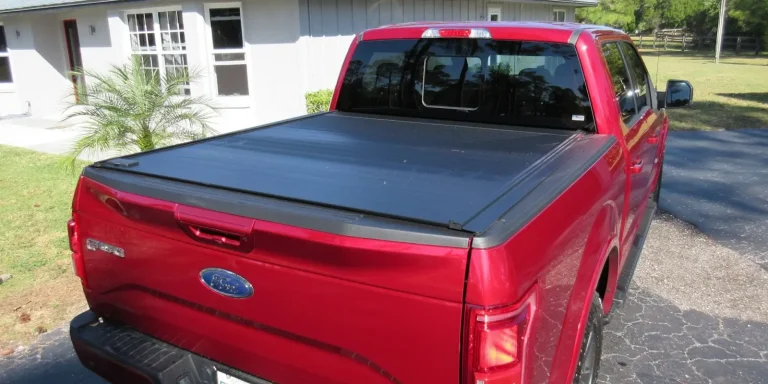
A retractable tonneau cover consists of interlocking slats — usually polycarbonate or aluminum — that slide along rails mounted to the bed and retract into a canister housed at the front of the truck bed near the cab. You pull a handle or press a button (on powered models) and the cover rolls into the canister like a tambour door on a desk. The cover can lock at any point along the track, giving you precisely the amount of bed access you need.
The canister is the defining trade-off. It’s a permanent fixture that occupies the first 10–14 inches of your bed, depending on the model. That space is gone — you can’t use it for cargo. Some manufacturers incorporate the canister into a low-profile design that minimizes the footprint, but it still eats usable bed length. On a 5.5-foot bed, losing a foot of length is significant. On an 8-foot bed, it’s more tolerable.
The rail system is the other defining feature. Two tracks run the full length of the bed, one on each side. These rails guide the slats during retraction and extension, and they also serve as the locking mechanism — the cover can be secured at any point along the rail. The rails sit on top of the bed rails and add roughly an inch of height to each side, which slightly reduces the usable width of the bed opening for cargo loading.
Folding tonneau covers come in two main variants: bi-fold (two panels) and tri-fold (three panels). Tri-folds are far more common and will be the focus of this comparison. The panels are connected by hinges and fold upward toward the cab when you need bed access. Most tri-folds give you one-third bed access with one panel folded, two-thirds with two, or full access by folding all panels against the rear window.
When fully folded, the stacked panels sit behind the cab window. This preserves all your bed space — there’s no canister eating into the cargo area. The trade-off is that the folded panels partially block your rear view through the back window and can look bulky when stacked. Some truck owners find the visual of three stacked panels unappealing, while others don’t mind at all. It’s a personal aesthetic judgment.
Folding covers come in soft and hard variants. Soft tri-folds use vinyl-covered frames — lighter and cheaper but less secure and less weather-resistant. Hard tri-folds use aluminum or composite panels — heavier and pricier but substantially better at weather sealing and theft deterrence. For this comparison against retractable covers, hard folding covers are the more direct competitor in terms of price, security, and build quality.
Retractable covers win here, especially powered models. One hand, one motion, and the cover slides open or closed. You can stop it at any position without latching or securing anything. Manual retractable covers are slightly more effort — you pull a strap or handle — but still simpler than folding panels. The entire open-close cycle takes under 5 seconds on a powered retractable.
Folding covers require unlatching each panel section, physically lifting and folding the panels back, and sometimes securing them against the cab with straps. It’s a two-hand operation that takes 15–30 seconds depending on the model. Not difficult, but noticeably more involved than sliding a retractable open. In cold weather, when latches can be stiff and panels feel heavier, the operational gap widens further.
Where folding covers gain back some ground is in partial access. Need to grab a single bag from the tailgate area? Fold just the rear panel. That takes about 3 seconds and exposes one-third of the bed without disturbing the rest of the cover. Retractable covers can also provide partial access, but you’re sliding the entire cover mechanism rather than just flipping one section.
Folding covers provide true 100% bed access when all panels are folded forward. Every inch of bed length is available for cargo. This matters when you’re hauling appliances, furniture, or anything that needs the full bed depth.
Retractable covers technically retract fully into the canister, but the canister itself takes up 10–14 inches at the cab end. So your usable bed length is permanently reduced. For a 5.5-foot bed, that’s roughly 15–20% of your cargo space gone. For an 8-foot bed, the impact is proportionally smaller but still present. If you regularly transport items that require the full bed — 4×8 sheets of plywood, for instance — the canister creates a real problem.
There’s a nuance here that often gets overlooked: the canister also affects how you load cargo from the side. Some canisters sit high enough to interfere with sliding long items into the bed from the side rail. Folding covers have no equivalent obstruction — when folded, the entire bed is open from all angles.
Both designs provide strong weather sealing when closed. Retractable covers have a slight edge because the continuous surface has fewer seams than a folding cover’s panel joints. Every hinge point on a folding cover is a potential leak path, even with quality weather stripping. That said, premium folding covers like the BAKFlip series have excellent drainage systems that manage water infiltration effectively — you might get trace moisture at the seams, but it routes into drain channels rather than pooling on your cargo.
Where the weather comparison gets interesting is in extreme conditions. Heavy snow loads favor folding covers because the rigid panels distribute weight to the bed rails through the frame. Retractable covers can buckle under heavy snow if the slats aren’t fully closed and locked, as the individual slats are thinner and less rigid than full panels. In heavy snow regions, folding covers handle winter conditions with less babying.
Wind noise is another weather-related factor. Retractable covers with interlocking slats can develop a subtle buzzing or humming at certain highway speeds as air passes over the joints between slats. Folding covers, with their broader panel surfaces, tend to be quieter at speed. This isn’t a major issue, but if you do a lot of highway driving and are sensitive to vehicle noise, it’s worth considering.
Retractable covers generally offer better security. The locking mechanism is integrated into the rail system, and the cover can’t be pried open without significant effort or damage. Polycarbonate and aluminum slat construction resists cutting and impact. The keyed lock system on models like the Retrax means only you can open the cover — there’s no exposed latch to pick or pry.
Folding covers vary widely in security. Hard folding covers with latch locks provide decent theft deterrence — an opportunistic thief won’t casually access your bed. But the panel hinges are exposed, and a determined thief with a pry bar can defeat most folding cover locks faster than they could compromise a retractable rail lock. Soft folding covers offer almost no security beyond visual concealment.
For truck owners who leave valuable equipment in their beds — construction tools, photography gear, fishing equipment — the security difference between retractable and folding is meaningful enough to influence the purchase decision. If security is a top-three priority for you, retractable covers are the stronger choice.
Folding covers tend to have fewer mechanical issues over their lifespan. The hinge mechanism is simple — there’s less that can go wrong. Common maintenance involves keeping hinges lubricated and replacing weather stripping every few years. The aluminum panels themselves are nearly indestructible under normal use, and the overall system has fewer parts that can fail.
Retractable covers have more moving parts: the rail system, canister mechanism, bearings, and sometimes an electric motor. When they work, they work beautifully. But a jammed rail, worn bearing, or malfunctioning motor means a trip to the dealer or a DIY repair that’s more complex than tightening a hinge. Rail maintenance — keeping the tracks clean and lubricated — is essential and ongoing. Skip it for six months, and you’ll start hearing grinding noises that signal accelerating wear.
Long-term reliability data leans toward folding covers. In owner satisfaction surveys and forum discussions, folding cover owners report fewer mechanical issues after the three-year mark compared to retractable cover owners. Retractable covers aren’t unreliable — they just have more components that require attention and more potential failure points. If low-maintenance ownership is important to you, folding covers have the advantage.
Folding covers span a wide price range. Budget tri-folds start around $300–$400, while premium hard folding covers from BAKFlip or Extang run $800–$1,200. That range means there’s a folding cover for almost any budget.
Retractable covers start where premium folding covers leave off. Expect to pay $900–$1,400 for a manual retractable and $1,400–$2,000+ for a powered retractable. There’s no budget tier in the retractable market — it’s a premium category across the board. The price gap isn’t just about materials; it reflects the more complex engineering, tighter manufacturing tolerances, and higher component count in retractable systems.
When closed, retractable covers sit flush with the bed rails and present a sleek, unbroken surface. There are no visible panel lines or hinges. This gives the cleanest look of any tonneau cover design. On trucks with premium paint and clean lines, the seamless appearance of a retractable cover is hard to beat.
Folding covers show visible hinge lines and panel seams across the bed. Low-profile models minimize this, but you can always tell a folding cover from a retractable by the panel joints. Whether this matters depends on how much you care about the truck’s appearance. Some owners see the panel lines as character; others see them as visual clutter on an otherwise clean truck profile.
Daily commuter / light hauling: A retractable cover makes daily use effortless. Quick access, easy closure, and a clean look when the bed isn’t loaded. The canister trade-off rarely matters if you’re hauling groceries and gear bags.
Weekend warrior / heavy hauling: A folding cover preserves all your bed space for big loads. When you need to haul a refrigerator, a stack of lumber, or camping gear for five people, those extra 12 inches of bed length matter. Fold the cover against the cab and you’ve got full access.
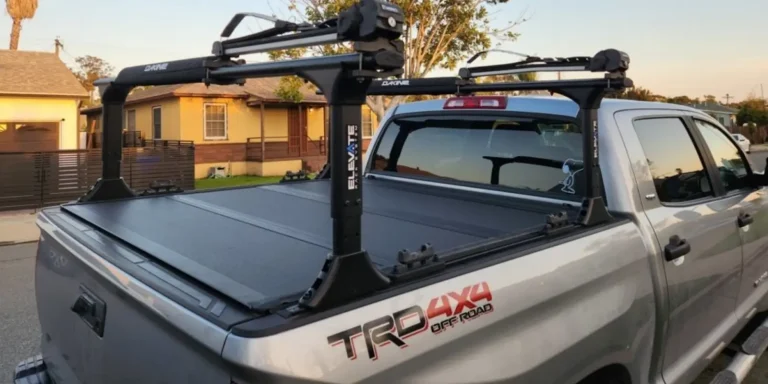
Overlanding and adventure builds: Retractable covers with T-slot rail systems (like the Retrax PowertraxPRO) pair well with roof rack accessories and bed rack systems. The integrated rail eliminates the need for separate mounting hardware and creates a versatile platform for adventure accessories.
Work truck: Folding covers tend to handle job site abuse better. They tolerate dirt, dust, and rough handling without the mechanical sensitivity of retractable rail systems. A hard tri-fold that you can fold out of the way in seconds is a practical choice for contractors and tradespeople.
Mixed use with towing: If you tow trailers and need to access the bed frequently at rest stops or job sites, the retractable’s one-hand operation is genuinely more convenient when you’re managing trailer connections, tie-downs, and cargo simultaneously. Folding panels with both hands occupied is awkward.
Some retractable covers have integrated T-slot rail systems designed specifically for rack accessories. Without that feature, installing a bed rack with a retractable cover is difficult because the canister and rail system occupy the same space where rack mounts typically sit. Folding covers are generally more compatible with aftermarket bed racks since they mount at the rail and leave the bed interior accessible.
Yes, but with caveats. Ice formation in the rail tracks can jam the retraction mechanism. Most retractable cover manufacturers recommend clearing ice from the rails before operating in freezing conditions. Powered models have stronger motors that can push through light ice, but heavy buildup still requires manual clearing. Folding covers handle extreme cold better because their hinge mechanisms are simpler and less affected by ice formation.
Folding covers typically have longer trouble-free lifespans because of their simpler mechanism. A quality hard folding cover can last 8–10 years with basic maintenance. Retractable covers have more components subject to wear, and rail-related issues tend to appear after 4–6 years of daily use. That said, premium retractable covers with sealed bearings and quality rails can match folding cover longevity with proper maintenance.
Yes, since both designs use clamp-on mounting systems specific to your truck’s bed rails. Removing one and installing the other is a straightforward process. Keep in mind that rail-mounting retractable covers may leave small marks on the bed rail where the tracks are secured — these won’t affect the installation of a subsequent folding cover but may be visible.
Folding covers are easier to remove and transfer to a new truck of the same make, model, and bed length. Retractable covers involve more hardware — rails, canister, wiring for powered models — making removal and reinstallation more labor-intensive. If you change trucks every few years, a folding cover is more practical to take with you.
Retractable covers trade bed space for operational convenience and aesthetics. Folding covers trade convenience for full bed access and a lower price. Neither is the wrong choice — they’re built for different priorities. Be honest about how you use your truck day to day, and the right design will be obvious. If you’re still torn after reading this comparison, spend a week consciously tracking how often you access your bed and what you put in it — that real-world data will point you to the answer faster than any review can.