Address
2949 Boundary Street
Jacksonville, FL 32202
Work Hours
Monday to Friday: 7AM - 7PM
Weekend: 10AM - 5PM
Address
2949 Boundary Street
Jacksonville, FL 32202
Work Hours
Monday to Friday: 7AM - 7PM
Weekend: 10AM - 5PM
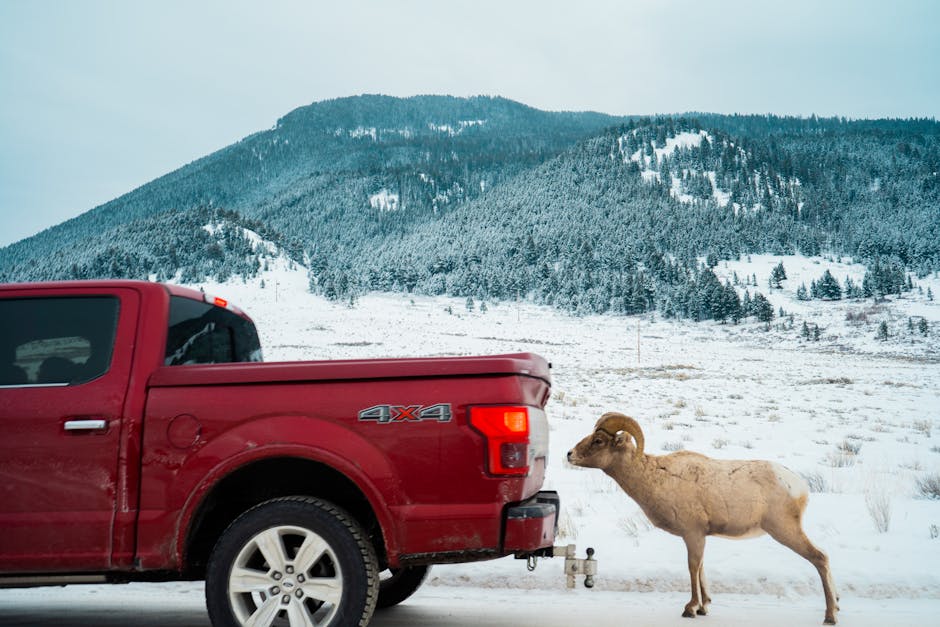
Roll-up and tri-fold tonneau covers are the two most popular entry points into truck bed protection, and they’re the covers most first-time buyers end up choosing between. Both are widely available, reasonably priced, and easy to install. But they handle differently in daily use, and the right choice depends on how you actually interact with your truck bed throughout the week.
I remember my first tonneau cover purchase — I spent an embarrassing amount of time reading comparisons before just picking one. Looking back, the decision should have taken about five minutes if I’d been honest about my truck usage from the start. This guide aims to save you that time by cutting to the practical differences that actually affect your daily experience with the cover.


A roll-up tonneau cover is best if you want quick full-bed access with one hand and prefer a streamlined appearance when the cover is open. A tri-fold cover is better if you want the option of partial bed access, prefer a rigid surface that handles rain and snow loads well, and don’t mind a slightly bulkier look when folded open. Both styles protect your cargo effectively for the money.
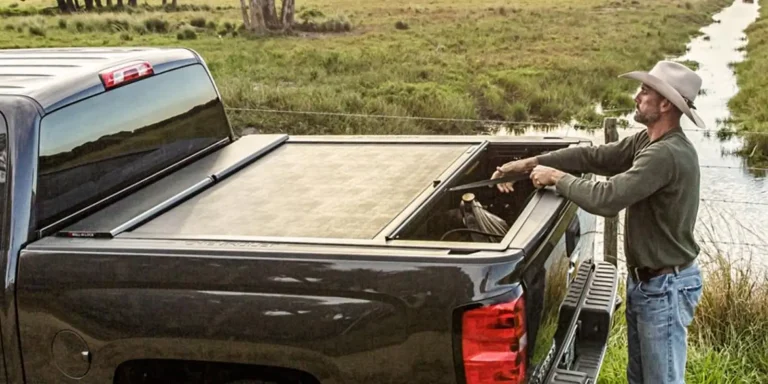
A roll-up cover consists of a vinyl or fabric sheet stretched over a series of lateral crossbars that give it structure. The cover rolls toward the cab when you release the tailgate latch, gathering near the rear window in a cylindrical bundle. A strap or buckle holds it in place when rolled open. To close, you pull the cover back toward the tailgate and latch it.
Roll-ups come in soft and hard variants. Soft roll-ups use vinyl or canvas stretched over aluminum bows. Hard roll-ups (like the BAK Revolver series) use interlocking aluminum slats covered in vinyl — giving you the convenience of a roll-up with the rigidity and security of a hard cover. Soft roll-ups dominate the budget category, while hard roll-ups sit in the mid-to-premium range.
The simplicity of the roll-up mechanism is its greatest strength. There are no hinges, no panel connections, and minimal hardware beyond the frame and latch. This simplicity translates to fewer things that can break, lighter total weight, and a lower price point than comparable tri-fold designs. It also means less visual clutter when the cover is closed — a smooth surface from cab to tailgate.
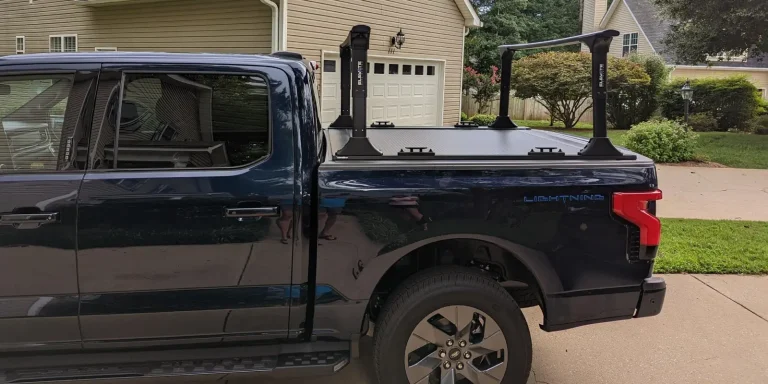
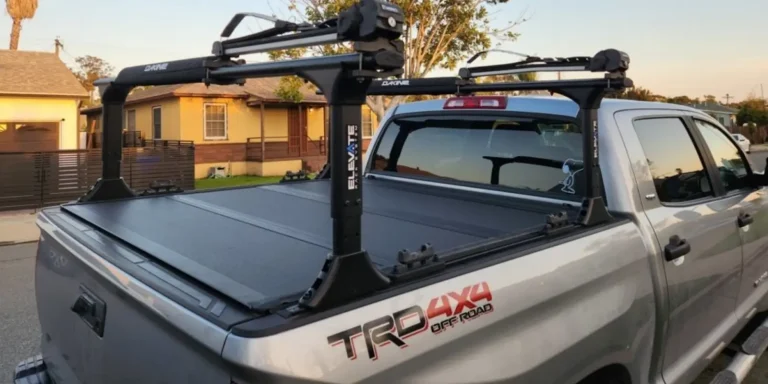
A tri-fold cover divides into three panels connected by hinges. It opens by folding the tailgate-end panel onto the middle panel, and then folding both onto the front panel. The three stacked panels rest against the rear window when the cover is fully open. Some models allow you to fold just one panel for one-third bed access.
Like roll-ups, tri-folds come in soft and hard versions. Soft tri-folds use vinyl over a lightweight frame. Hard tri-folds use aluminum or composite panels with solid cores. The hard tri-fold category is one of the most popular tonneau cover segments, offering a strong balance of protection, aesthetics, and price.
The panel design gives tri-folds a structural advantage that extends beyond weather protection. Each panel acts as a rigid section that maintains its shape regardless of conditions. Unlike a fabric surface that can ripple or sag, a tri-fold panel stays flat. This rigidity means better water shedding, better snow load handling, and a more substantial feel when you open and close the cover.
Roll-ups are faster. Release the latch, roll the cover up, strap it, and you’re done. The whole process takes about 10 seconds one-handed. Closing is equally fast — pull and latch. No panels to align, no hinges to manage. For truck owners who access their bed multiple times per day — loading tools in the morning, adding purchases throughout the day, unloading in the evening — those seconds add up to a genuinely more convenient experience.
Tri-folds take 20–30 seconds. You unlatch the first panel, fold it back, fold the second section, and either strap or clamp the stack in place. Closing requires unfolding, positioning each panel, and securing the latches. It’s not slow, but there’s more physical interaction involved. In cold weather, when latches can be stiff and gloved hands make fine motor tasks harder, the operational difference becomes more noticeable.
Tri-folds offer a genuine advantage here. You can fold just the rear panel for one-third bed access — enough to load tall items near the tailgate without exposing the entire bed. This is convenient for quick stops where you’re grabbing a single item from the bed without wanting to open everything up. I found this feature surprisingly useful during everyday errands — tossing a bag of mulch in the back doesn’t require exposing the whole bed and everything else inside it.
Roll-ups are essentially all-or-nothing. You can partially unroll them, but most designs don’t have a clean way to secure the cover at a midpoint. The cover either rolls up to the cab or stays flat across the bed. Some models offer intermediate positions, but they’re less common and less secure than a tri-fold’s natural one-third stop.
Both styles provide full bed access when open, but the form factor of the opened cover differs. A rolled-up cover sits as a compact cylinder near the cab, typically taking up 6–8 inches of space behind the rear window. It partially obscures the rear window view but not dramatically.
A tri-fold stack sits as a thick rectangular block — three panels deep — against the rear window. It’s bulkier than a rolled cover and blocks more of the rear view. The stacked height also affects clearance if you’re loading tall items against the cab end of the bed. For trucks with backup cameras, this difference is less important since you’re not relying on the rear window for reverse visibility. But for trucks without cameras, the tri-fold’s larger profile is worth noting.
Hard tri-folds win this category convincingly. The solid panels shed rain and support snow loads without sagging. Water runs off the surface and drains through perimeter seals and drain channels. A quality hard tri-fold keeps cargo dry through sustained heavy rain with minimal seepage at the hinge joints.
Soft roll-ups rely on tension to create a taut surface that sheds water. They work well in light to moderate rain. But soft vinyl surfaces can pool water during heavy downpours, especially if the cover has lost tension over time. Soft roll-ups also allow more wind-driven rain to enter around the edges compared to the rigid seal of a hard panel.
Soft tri-folds fall between the two — better than soft roll-ups due to their flatter panel surfaces, but not as effective as hard tri-folds. Hard roll-ups perform similarly to hard tri-folds since the rigid slats create an effective water-shedding surface.
The water pooling issue on soft roll-ups deserves specific attention because it’s the most common complaint from first-time owners. In moderate rain, a properly tensioned soft roll-up handles water fine — the slight crown created by the crossbars directs water to the edges. But in heavy rain, water collects faster than it drains, creating a visible pool in the center of the cover. This pool adds weight that stretches the fabric, which creates a deeper pool, which stretches further — a frustrating cycle. The fix is maintaining proper tension and brushing water off the cover during extended heavy rain. Hard tri-folds simply don’t have this problem.
Tri-folds, particularly hard versions, age well. The panels maintain their shape, the hinges are the only moving component, and the rigid structure resists the kind of wear that comes from repeated flexing. A hard tri-fold from BAKFlip or Extang can serve reliably for 5–8 years with basic maintenance.
Soft roll-ups face more aging challenges. The vinyl fabric flexes every time you roll and unroll it, and over hundreds of cycles, the material can develop creases, lose tension, or crack at the fold points. The aluminum crossbars can also shift or loosen inside the fabric pockets. Average lifespan for a quality soft roll-up is 3–5 years of regular use, though some owners get longer with diligent care.
Hard roll-ups split the difference — the aluminum slats resist cracking and creasing, but the connecting mechanisms between slats see more wear than tri-fold hinges.
UV degradation affects both types but manifests differently. Soft roll-up vinyl fades and becomes brittle — eventually cracking along flex lines. Tri-fold panels fade but maintain structural integrity. Both benefit significantly from regular UV protectant application. In sun-heavy climates (Arizona, Texas, Florida), the vinyl on a soft roll-up can degrade noticeably within 2–3 years without protection, while a hard tri-fold’s coated panels resist UV damage for 5+ years before showing meaningful fading.
Neither soft roll-ups nor soft tri-folds provide meaningful security. Both can be defeated with a box cutter in seconds. They conceal your cargo from view, which deters casual theft, but won’t stop a determined thief.
Hard tri-folds offer moderate security when latched. The solid panels resist prying, and the latch mechanisms require either a key or tailgate-locked access to open. It’s not vault-level security, but it’ll prevent opportunistic grab-and-go theft. For truck owners who leave items in the bed while shopping, dining, or at the gym, the visual and physical barrier of a hard tri-fold is a legitimate deterrent.
Hard roll-ups vary — some have integrated locking mechanisms that rival hard tri-folds, while others rely on the same latch systems as soft covers. Check the specific model’s security features rather than assuming all hard roll-ups offer the same protection.
Soft roll-ups are the most affordable tonneau cover category, starting around $200 and topping out around $500 for premium models like the TruXedo Pro X15. Soft tri-folds start slightly higher, typically $250–$550. These are the entry-level price points for truck bed protection, and they represent genuine value for the money.
Hard tri-folds range from $400 for budget brands to $1,200 for premium options like the BAKFlip MX4. Hard roll-ups sit in the $700–$1,400 range. You get more options and a wider budget spread with the tri-fold design, which is part of why tri-folds dominate the market.
When evaluating price, consider the lifespan factor. A $300 soft roll-up that lasts 3 years costs $100/year. A $900 hard tri-fold that lasts 8 years costs $112/year. The annual cost is surprisingly similar, but the hard tri-fold provides better protection and security throughout its longer life. If you plan to keep your truck for more than 3 years, the hard tri-fold often makes more financial sense despite the higher upfront cost.
Both are similar in installation complexity. Clamp-on mounting takes 15–30 minutes for either style. Roll-ups have a slight edge because the single-piece cover is easier to position on the bed than aligning three separate panels, but the difference is minimal. Both are genuine DIY installations requiring only basic hand tools.
You can safely drive with a tri-fold partially folded — the folded panels are secured by their own weight and the cab. Driving with a roll-up partially unrolled isn’t recommended because the loose material can flap in the wind, potentially damaging the cover or the truck’s paint near the cab.
If you access your bed more than twice a day, a roll-up’s quick one-hand operation is noticeably more convenient. If you only open the bed once or twice daily, the speed difference becomes negligible and a tri-fold’s partial access option may be more useful.
Standard tri-folds can interfere with fifth-wheel hitches because the folded panels stack near the cab where the hitch operates. Some manufacturers offer fifth-wheel compatible tri-folds with modified panel dimensions. Roll-ups generally clear fifth-wheel hitches when rolled up, making them the simpler choice for towing.
Hard tri-folds handle temperature extremes better overall. They don’t become brittle in cold like vinyl, and they don’t sag in heat. Soft roll-ups can become stiff and difficult to roll in deep cold (below 0°F) and can stretch and sag in sustained high heat (above 100°F). If you live in a climate with temperature extremes, factor this into your decision.
For most truck owners making their first tonneau cover purchase, a hard tri-fold offers the best balance of protection, security, and durability for the price. If budget is tight, a soft roll-up from TruXedo or Gator provides honest daily protection for under $350. Match the style to your usage pattern — frequent quick access favors roll-ups, weather protection and partial access favor tri-folds. Either way, any cover is dramatically better than leaving your bed open to the elements and prying eyes.