Address
2949 Boundary Street
Jacksonville, FL 32202
Work Hours
Monday to Friday: 7AM - 7PM
Weekend: 10AM - 5PM
Address
2949 Boundary Street
Jacksonville, FL 32202
Work Hours
Monday to Friday: 7AM - 7PM
Weekend: 10AM - 5PM
The tonneau cover market has more options than most truck owners expect. Soft roll-ups, hard tri-folds, retractable panels, one-piece hinged shells — each with multiple brands, price tiers, and feature sets. Walking into this market without a framework for decision-making usually leads to either analysis paralysis or an impulse purchase you regret six months later. This guide gives you the framework.
I’ve helped dozens of truck owners pick tonneau covers over the years, and the ones who end up happiest always start from the same place: an honest assessment of how they use their truck. Not how they want to use it, not how they imagine using it next year — how they actually use it right now, this week, on a normal Tuesday. That’s the foundation for the right choice.
Products are available — click below to view them!
SEE DETAILSChoosing the right tonneau cover comes down to four questions: What’s your primary use for the cover (weather protection, security, appearance, or all three)? How often do you need full bed access? What’s your realistic budget? And what’s your truck’s make, model, year, and bed length? Answer those honestly and the field narrows from hundreds of options to three or four strong candidates.
Every tonneau cover provides some weather protection, some security, and some aesthetic improvement. But covers are optimized differently, and your primary need should drive the category selection before you compare individual products.
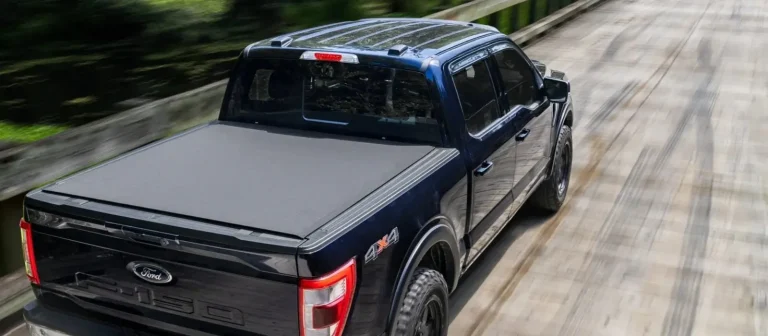
Weather protection first: If keeping your cargo bone-dry matters most — you carry electronics, paperwork, sensitive equipment, or personal items that can’t get wet — lean toward hard folding covers with integrated drainage systems. The BAKFlip MX4, Extang Solid Fold 2.0, and UnderCover Ultra Flex lead this category. They manage water with rigid panels and engineered drain channels rather than relying on fabric tension.
Security first: If your truck carries tools, equipment, or valuables that you leave unattended, focus on covers with integrated locking systems that resist forced entry. Retractable covers from Retrax offer the strongest integrated security with rail-mounted locks. Hard folding covers with dual-latch systems from UnderCover are the next best option. Soft covers of any type provide concealment but negligible physical security.
Appearance first: If the cover’s primary job is making your truck look finished and clean, prioritize flush-mount low-profile designs. Retractable covers provide the cleanest appearance when closed — no visible panel lines or hinges. Hard folding covers with flush-mount profiles (like the BAKFlip MX4) are the next cleanest look. Soft covers typically look good but are identifiable as aftermarket additions.
Budget-conscious protection: If you want basic rain and UV protection without spending four figures, soft roll-up covers deliver honest everyday protection for $200–$400. The TruXedo TruXport and Gator ETX are the standout options in this category. They won’t match hard covers for weather sealing or security, but they’re dramatically better than leaving the bed open.
A vinyl or fabric sheet over aluminum crossbars that rolls toward the cab for bed access. The simplest design, lightest weight, and lowest price. Provides basic weather resistance and cargo concealment. Limited security — a box cutter defeats any soft cover. Best for truck owners who want affordable protection and frequent quick bed access. Average lifespan: 3–5 years.
Three vinyl-covered panels connected by hinges that fold toward the cab. Slightly better weather resistance than roll-ups because the panel surfaces are flatter and shed water more effectively. Offers partial bed access by folding just one panel. Similar security limitations as soft roll-ups. Best for owners who want budget protection with the option of partial bed access. Average lifespan: 3–5 years.
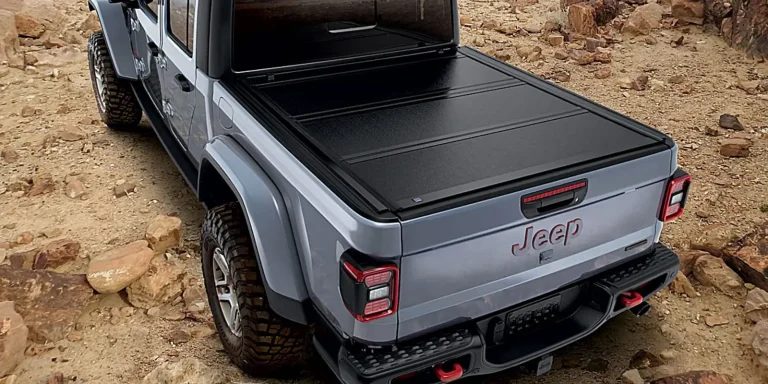
Three aluminum or composite panels with solid cores, connected by engineered hinges. Significantly better weather protection than soft alternatives, with perimeter seals and drain systems. Moderate security with latch-locking panels. The most popular tonneau cover category overall, offering the best balance of protection, appearance, and price. Best for most truck owners. Average lifespan: 5–8 years.
Interlocking aluminum or vinyl-wrapped slats that roll into a compact bundle at the cab. Combines hard cover rigidity with roll-up convenience. Better security than soft options, similar weather performance to hard tri-folds. Best for owners who want hard cover protection without the bulk of folded panels when the cover is open. Average lifespan: 5–7 years.
Interlocking polycarbonate or aluminum slats that slide along rails and retract into a canister at the cab end of the bed. The smoothest operation — one-hand open and close, lockable at any position. Best security of any tonneau cover type. Sacrifices 10–14 inches of bed space to the canister. Available in manual and powered (motorized) versions. Best for daily drivers who prioritize convenience and security. Average lifespan: 5–8 years with proper rail maintenance.
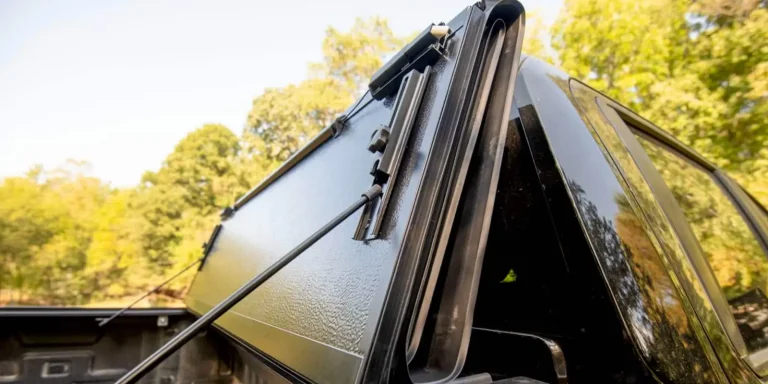
A single solid panel that hinges open at the cab end, lifting the entire cover like a trunk lid. Provides the strongest weather sealing (no fold points) and good security. But requires significant clearance above the truck to open fully, and you lose all bed access without lifting the heavy panel. Best for trucks used primarily as covered cargo transporters rather than open-bed haulers. Less common than other types. Average lifespan: 7–10 years.
Here’s where honest self-assessment matters most. Think about your last two weeks of truck use and answer these questions:
How often do you access the bed? Multiple times daily points toward roll-up or retractable covers for speed of operation. Once or twice a week makes the operation speed less important, opening up all cover types equally.
Do you need full bed access or is partial access enough? If you regularly haul large items (furniture, sheets of plywood, appliances), you need full bed access — and folding or roll-up covers deliver that without the canister trade-off of retractable designs. If most of your cargo fits in the tailgate-end half of the bed, partial access from a tri-fold’s rear panel is sufficient.
What do you carry? High-value items that need security push you toward retractable or hard folding covers with locks. Weather-sensitive items push you toward hard covers with drainage systems. Basic gear and groceries are well-served by any cover type including budget soft covers.
Do you tow fifth-wheel or gooseneck? If yes, you need a cover designed for fifth-wheel compatibility. Standard covers block the hitch area. Several brands offer modified versions with removable front sections — check for fifth-wheel fitment before purchasing.
What’s your climate? Heavy snow loads favor hard panels that distribute weight. Extreme UV exposure favors covers with UV-resistant coatings. Frequent rain favors hard covers with drain systems. Mild climates make all cover types equally viable.
This step seems obvious but causes more returns and frustrations than any other factor. Tonneau covers are vehicle-specific. You need to match four variables exactly:
Make and model: A cover for a Ford F-150 won’t fit a Chevy Silverado, even if the beds look similar. Rail profiles, bed widths, and mounting geometries differ between manufacturers.
Model year / generation: Trucks change bed designs between generations. A 2018 F-150 and a 2021 F-150 are both “F-150s” but have different bed rail profiles. Always match the exact model year, not just the model name.
Bed length: Most trucks offer two or three bed length options. The cover must match your specific bed length — a 5.5-foot cover won’t seal on a 6.5-foot bed. Measure your bed from inside the bulkhead to the inside of the tailgate to confirm.
Accessories and modifications: Bed liners (especially drop-in types), bed racks, toolboxes, tailgate accessories, and fifth-wheel hitches can all affect tonneau cover fitment. Note everything currently installed on your bed and check compatibility before ordering.
Tonneau cover pricing breaks into clear tiers, and there’s a real quality floor below which covers aren’t worth buying:
$200–$400 (entry level): Quality soft roll-ups and soft tri-folds. Good daily protection, basic concealment, no real security. TruXedo TruXport, Gator ETX, and Tyger Auto are reliable options in this range. Below $200, quality drops significantly — I’d avoid no-name Amazon covers under $150.
$400–$800 (mid-range): Budget hard tri-folds, premium soft covers, and entry-level hard roll-ups. Better weather sealing, moderate security, and improved durability over entry-level. Rough Country hard tri-folds and TruXedo Pro X15 sit here.
$800–$1,400 (premium): Top-tier hard folding covers, quality retractable covers, and hard roll-ups. Excellent weather protection, good security, and 5+ year durability. BAKFlip MX4, Extang Solid Fold 2.0, Retrax RetraxONE MX, and UnderCover Ultra Flex live in this range. This tier offers the best long-term value for most truck owners.
$1,400–$2,500 (ultra-premium): Powered retractable covers, DiamondBack HD load-bearing covers, and specialty options. These serve specific needs — motorized convenience, load-bearing capability, or maximum security. Not necessary for most owners, but excellent for those with the specific requirements they address.
Buying based on price alone: The cheapest cover isn’t the best value. A $150 cover that deteriorates in two years costs more per year than a $900 cover that lasts eight years. Calculate cost-per-year, not just purchase price.
Choosing based on looks without considering operation: A cover might look amazing in photos but be annoying to open and close daily. Watch installation and operation videos for any cover you’re considering to understand the daily user experience.
Ignoring your actual bed length: Measure. Don’t guess. Don’t assume your buddy’s F-150 has the same bed as yours. A tape measure costs $10 and prevents a $400 mistake.
Skipping compatibility checks for existing accessories: That bed rack you installed last year? It might interfere with the tonneau cover you’re about to buy. Check compatibility for every bed accessory before ordering.
Expecting waterproof performance: No tonneau cover is waterproof. They’re weather-resistant. If you need truly waterproof cargo protection, use dry bags or waterproof containers inside the bed, with the tonneau cover as your primary weather barrier. Setting realistic expectations prevents disappointment.
A hard tri-fold in the $500–$900 range is the safest first purchase for most truck owners. It provides good weather protection, moderate security, reasonable pricing, and the option of partial bed access. You get exposure to the benefits of a tonneau cover without committing to the premium price or mechanical complexity of retractable designs. If you discover after six months that you need more security or smoother operation, you can upgrade with a clear understanding of what matters to you.
Online pricing is typically 10–20% lower than local dealers. However, local dealers offer test-fitting, professional installation, and easier warranty support. If you’re confident in your fitment specs and comfortable with DIY installation, online purchasing saves money. If you’re unsure about fitment or prefer hands-on support, a local dealer’s markup buys valuable peace of mind and installation expertise.
Yes. The vast majority of tonneau covers are designed for DIY installation with basic hand tools. Soft covers take 15–20 minutes. Hard folding covers take 30–45 minutes. Retractable covers take 45–60 minutes. No drilling or permanent modification is required for most covers. Watch the manufacturer’s installation video for your specific cover and truck before starting.
Soft covers: 3–5 years with regular maintenance. Hard folding covers: 5–8 years. Retractable covers: 5–8 years with proper rail maintenance. One-piece covers: 7–10 years. These are averages for quality brands with regular care. Cheap covers can fail within a year, and well-maintained premium covers can exceed these ranges significantly.
No. A camper shell provides enclosed cargo protection that makes a tonneau cover redundant. If you switch between a shell and open bed seasonally, a tonneau cover for the open-bed months is worth considering. But running both simultaneously doesn’t make sense — the shell already does everything a tonneau cover does and more.