Address
2949 Boundary Street
Jacksonville, FL 32202
Work Hours
Monday to Friday: 7AM - 7PM
Weekend: 10AM - 5PM
Address
2949 Boundary Street
Jacksonville, FL 32202
Work Hours
Monday to Friday: 7AM - 7PM
Weekend: 10AM - 5PM
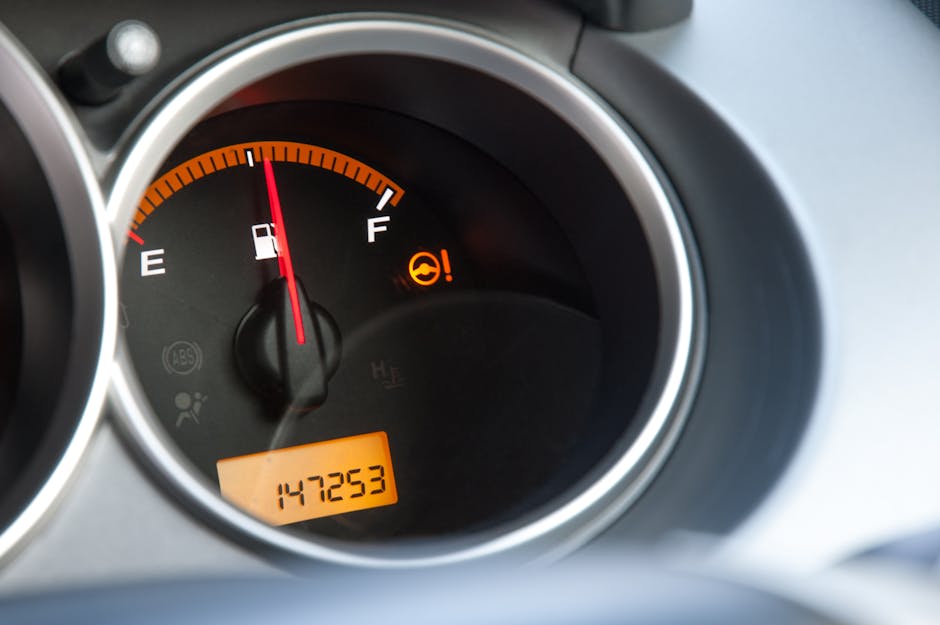
The claim that tonneau covers improve gas mileage is one of the most repeated selling points in the truck accessory market. Sales pages mention it. Dealer installers mention it. Your buddy who just bought one definitely mentioned it. But does the data actually back it up? The answer is yes — with caveats that matter more than the headline number.
I’ve dug into the actual testing data, aerodynamic research, and real-world owner reports to separate the marketing claims from measurable reality. The fuel savings are real, but they’re smaller than most people expect, and several factors determine whether you’ll notice any difference at the pump.

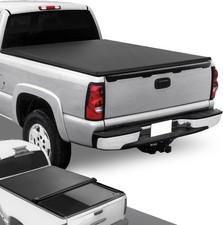


Yes, tonneau covers can improve gas mileage by approximately 1–3% at sustained highway speeds. The improvement comes from reducing aerodynamic drag caused by the open truck bed. The actual savings depend on driving speed, driving patterns, cover type, and truck aerodynamics. At current fuel prices, this translates to roughly $50–$150 per year for average drivers — meaningful over a cover’s lifetime but not a primary reason to buy one.
An open truck bed creates a significant aerodynamic problem. As air flows over the cab roof and drops into the bed, it creates a recirculating vortex — a pocket of turbulent air that spins in place. This vortex creates drag that the engine must work against to maintain speed. The larger the bed opening, the larger the vortex, and the more energy is wasted fighting it.
A tonneau cover eliminates much of this vortex by creating a smooth (or smoother) surface across the bed opening. Air flows over the cab, across the cover surface, and off the tailgate with significantly less turbulence. The energy that was previously wasted on the bed vortex is no longer needed, and the engine can maintain the same speed with slightly less fuel.
This aerodynamic principle is well-established in automotive engineering. Wind tunnel testing consistently shows that a covered truck bed has measurably lower drag coefficient than an open bed. The disagreement isn’t about whether the effect exists — it’s about how large the effect is in real-world driving conditions.
Several organizations have tested the fuel economy impact of tonneau covers, and the results cluster in a consistent range:
SEMA (Specialty Equipment Market Association) has cited studies showing a 1.8% improvement in fuel economy at highway speeds with a hard tonneau cover installed. This figure is frequently referenced in industry marketing materials.
Consumer Reports and independent automotive publications have found fuel economy improvements ranging from 1% to 3.2% depending on the truck, cover type, and test conditions. The improvements are consistently at the lower end of that range in mixed driving and at the higher end in sustained highway driving.
Real-world owner tracking through fuel logging apps and forums shows more variable results. Some owners report 1–2 mpg improvements after installing a cover. Others report no measurable change. The variability comes from the difficulty of controlling for all the factors that affect fuel economy — tire pressure, wind conditions, driving style, temperature, cargo weight, and more.
The most honest summary of the data: expect a 1–2% improvement in overall fuel economy, with the benefit concentrated in highway driving. In city driving, the aerodynamic benefit is negligible because the drag reduction only matters at speeds above roughly 40 mph where aerodynamic forces become significant.
Aerodynamic drag increases with the square of velocity. At 30 mph, aerodynamic drag is a minor component of total resistance. At 70 mph, it’s the dominant factor. This means the tonneau cover’s fuel-saving benefit increases disproportionately with speed. A truck that spends most of its miles at 70+ mph on the interstate will see a larger percentage improvement than a truck that mostly drives at 35 mph in suburban traffic.
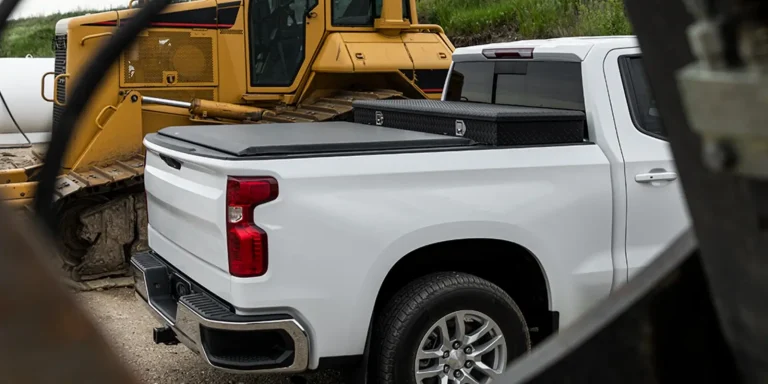
Flush-mount hard covers provide the best aerodynamic benefit because they create the smoothest surface for airflow. A perfectly flat, flush surface eliminates virtually all of the bed vortex. Low-profile covers sit slightly below the rail line but still provide excellent aerodynamic performance.
Standard-profile hard covers sit above the rail line, creating a small step in the airflow. This step generates some turbulence, reducing the aerodynamic benefit slightly compared to flush designs. The reduction is small — maybe 0.5% less improvement than a flush cover.
Soft covers provide a good but not perfect aerodynamic surface. The fabric can ripple or vibrate at highway speeds, and the crossbar ridges (on roll-ups) create minor turbulence. Soft covers still improve aerodynamics meaningfully compared to an open bed, but they don’t match the smooth surface of a hard cover.
The fuel economy benefit varies by truck. Trucks with larger bed openings (full-size trucks with 8-foot beds) have more drag to eliminate and thus show larger absolute improvements. Trucks with more aerodynamic cab designs (lower, more streamlined profiles) already manage airflow better, so the incremental benefit of a tonneau cover is proportionally smaller.
Cab-to-bed height differential also matters. Trucks where the cab roof sits significantly higher than the bed rails (like many lifted trucks) create a larger airflow drop into the bed, making the cover’s drag reduction more significant. Trucks with cab-height bed rails (some modern designs) already minimize this drop, reducing the cover’s incremental benefit.
Interestingly, research has shown that driving with the tailgate up and a tonneau cover installed produces better fuel economy than driving with the tailgate down. The tailgate creates an air dam that, combined with the cover, creates a smooth airflow pocket. Removing the tailgate or driving with it down disrupts this aerodynamic system and can actually reduce the benefit of the tonneau cover.
Let’s put real numbers to the fuel savings for a typical truck owner:
Assumptions: 15,000 miles per year, 50% highway driving, 20 mpg baseline highway fuel economy, $3.50 per gallon fuel cost, 2% fuel economy improvement from tonneau cover.
Calculation: 7,500 highway miles ÷ 20 mpg = 375 gallons baseline. A 2% improvement saves 7.5 gallons per year. At $3.50/gallon, that’s $26.25 saved from highway driving. Add a smaller improvement from city driving (approximately $10–$15), and total annual savings land around $35–$45.
For a driver doing more highway miles or with higher fuel costs, the savings scale up. A long-distance commuter doing 25,000 miles per year at $4.00/gallon could save $80–$120 annually. Over a cover’s 5–8 year lifespan, cumulative savings range from $175 to $960 depending on driving patterns and fuel prices.
These aren’t life-changing savings, but they’re real. A tonneau cover essentially earns back a portion of its purchase price through fuel savings over its lifetime. The payback is a bonus, not the primary value proposition.
A persistent myth claims that driving with the tailgate down improves fuel economy by allowing air to flow through the bed. Multiple studies have debunked this. With the tailgate up, the air vortex in the bed actually creates an aerodynamic “virtual tailgate” that smooths airflow over the bed area. Lowering the tailgate disrupts this effect and increases drag.
The optimal configuration for fuel economy is: tailgate up, tonneau cover closed, cover flush with bed rails. This creates the smoothest possible airflow from cab to tailgate, minimizing drag across the entire truck profile. Adding a tonneau cover to a truck that already drives with the tailgate up provides the incremental improvement described above.
Not all tonneau covers create equal aerodynamic improvement. Here’s a rough ranking from most to least aerodynamic benefit:
Flush-mount hard covers (retractable or low-profile tri-fold): Best aerodynamics. The perfectly smooth, flush surface minimizes all bed-related turbulence. These covers come closest to turning the truck bed into a sedan-like trunk profile from an airflow perspective.
Standard hard tri-fold and hard roll-up covers: Very good aerodynamics. The slightly raised profile creates minor turbulence at the rail edge, but the rigid surface sheds air cleanly. Panel seams on tri-folds create negligible aerodynamic impact at real-world speeds.
Soft roll-up covers: Good aerodynamics. The fabric surface isn’t perfectly smooth — crossbar ridges and material ripple create minor turbulence. But the covered surface is still dramatically better than an open bed void.
Soft tri-fold covers: Good aerodynamics, similar to soft roll-ups. The panel seams don’t significantly affect airflow. The slightly higher profile of some soft tri-fold frames can create a small step in airflow compared to low-profile soft roll-ups.
The practical difference between the best and worst tonneau cover types for fuel economy is about 0.5–1%. All covers improve fuel economy compared to an open bed. The type difference is measurable in a lab but functionally irrelevant at the gas pump. Choose your cover based on protection, security, and convenience — not based on marginal aerodynamic rankings.
Here’s the honest bottom line on tonneau covers and fuel economy: yes, they help. No, you won’t get rich from the savings. The 1–3% improvement is real but modest compared to free behavioral changes like maintaining tire pressure, reducing highway speed by 5 mph, or removing unnecessary weight from the truck.
Buy a tonneau cover because you want to protect your cargo, improve your truck’s appearance, and add security to your bed. Enjoy the fuel savings as a nice perk that partially offsets the cover’s cost over its lifetime. If someone tells you a tonneau cover will “pay for itself in gas savings,” they’re stretching the math — but if someone tells you it makes zero difference, they’re ignoring real data.
For context, here’s how tonneau cover fuel savings compare to other common modifications:
Proper tire inflation: Maintaining correct tire pressure can improve fuel economy by 3–5%. This is free and more impactful than a tonneau cover. Check your tire pressure monthly.
Removing unnecessary weight: Every 100 pounds of unnecessary cargo reduces fuel economy by about 1%. If you’re carrying 200 pounds of tools you don’t need daily, removing them saves more fuel than a tonneau cover.
Steady speed driving: Avoiding aggressive acceleration and maintaining steady highway speed can improve fuel economy by 10–20%. This dwarfs any accessory-based improvement.
The tonneau cover’s 1–3% improvement is real but modest compared to free behavioral changes. The cover’s value proposition is primarily in cargo protection, security, and appearance — the fuel savings are a legitimate but secondary benefit.
Yes. A tonneau cover with the tailgate up provides better fuel economy than an open bed with the tailgate removed. The tailgate and cover work together aerodynamically — the tailgate creates an air dam that complements the cover’s smooth surface. Removing the tailgate disrupts this system and increases overall drag.
Marginally. Hard flush-mount covers provide the smoothest aerodynamic surface and thus the best fuel economy improvement. Soft covers improve aerodynamics compared to an open bed but not as much as a perfectly smooth hard surface. The difference between hard and soft covers is approximately 0.5–1% — noticeable in wind tunnel testing but difficult to detect at the gas pump.
Probably not. A 1–2% improvement in fuel economy translates to about 0.2–0.4 mpg on a truck getting 20 mpg. That’s within the normal variation you’d see from weather, wind, tire pressure, and driving style changes. You’d need to track fuel economy carefully over several tanks with consistent driving conditions to isolate the cover’s impact. Most owners don’t notice the savings at the pump — they show up in long-term tracking.
Not by itself. Even optimistic fuel savings of $100–$150 per year don’t come close to recovering the cost of a $900 hard cover within its lifespan. The fuel savings are a genuine benefit but should be viewed as a bonus, not the primary purchase justification. Buy a tonneau cover for cargo protection, security, and appearance — enjoy the fuel savings as a side benefit.
Yes, in terms of aerodynamic improvement. Lifted trucks have a larger cab-to-bed height differential, which creates a bigger airflow drop into the bed and a larger drag vortex. A tonneau cover eliminates more drag on a lifted truck than on a stock-height truck, resulting in a proportionally larger fuel economy improvement. However, the baseline fuel economy of a lifted truck is already worse due to increased frontal area and tire size, so the absolute gallons saved may be similar.