Address
2949 Boundary Street
Jacksonville, FL 32202
Work Hours
Monday to Friday: 7AM - 7PM
Weekend: 10AM - 5PM
Address
2949 Boundary Street
Jacksonville, FL 32202
Work Hours
Monday to Friday: 7AM - 7PM
Weekend: 10AM - 5PM

The hard vs soft question is the first fork in the road for most tonneau cover buyers, and it’s the decision that shapes everything else — your budget, your security level, your weather protection, and how you interact with the cover every day. Both categories have evolved significantly in the last decade, and the gap between them has narrowed in some areas while widening in others.
I’ve owned both types at different points and on different trucks, and the honest truth is that each type excels in situations where the other falls short. There’s no universally correct answer. But by the time you finish this comparison, you’ll know which type aligns with your truck, your budget, and your daily routine.


Hard tonneau covers offer superior weather protection, meaningful security, longer lifespan, and a more premium appearance. They cost more, weigh more, and take longer to install. Soft tonneau covers offer lighter weight, faster operation, easier installation, and significantly lower prices. They sacrifice security, weather performance in extreme conditions, and longevity. For truck owners who can afford it and plan to keep their truck for several years, hard covers typically provide better long-term value.
The distinction is straightforward but worth clarifying, since some covers blur the line:
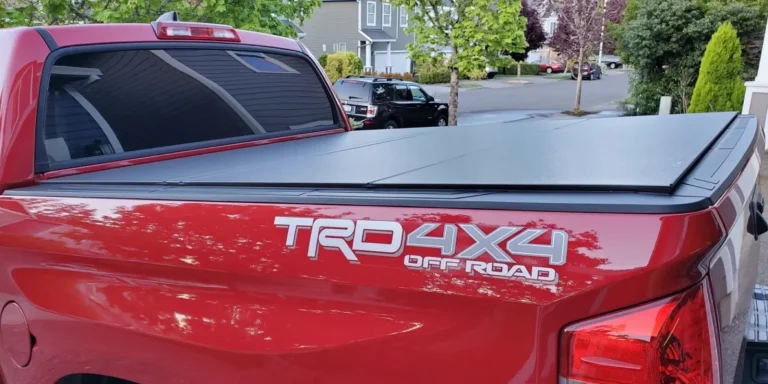
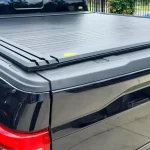
Hard covers use rigid panels made from aluminum, composite, fiberglass, or polycarbonate. They maintain their shape regardless of conditions. This category includes hard tri-folds (BAKFlip MX4, Extang Solid Fold), hard roll-ups (BAK Revolver), retractable covers (Retrax, Roll-N-Lock), and one-piece hinged covers (UnderCover SE). The defining characteristic is structural rigidity — the cover holds its shape independently.
Soft covers use flexible materials — vinyl, canvas, or woven synthetic fabrics — stretched over a frame of aluminum crossbars. They rely on tension and the frame for their shape. This category includes soft roll-ups (TruXedo TruXport, Gator ETX), soft tri-folds (Extang Trifecta, Gator SFX), and snap-on covers. The defining characteristic is flexibility — the cover material conforms and flexes.
Hard covers are demonstrably better at keeping water, snow, and debris out of your truck bed. The rigid panels create predictable surfaces that shed water consistently. Integrated drainage systems collect any water that enters at seal joints and route it through tubes to exit below the truck. The panel rigidity maintains consistent seal compression around the perimeter, keeping the weather barrier intact even in high winds.
Soft covers handle everyday weather reasonably well. A properly tensioned soft cover sheds light-to-moderate rain without problems. But their limitations show during sustained heavy rain (water pooling on the fabric surface), high winds (cover lifting or flapping, breaking seal contact), and snow (sagging under weight, losing tension). These aren’t fatal flaws — millions of truck owners use soft covers in all climates — but you’ll experience more water intrusion during extreme weather events than you would with a hard cover.
The practical impact depends on what you’re carrying. If your bed cargo is already in waterproof containers or you’re carrying items that tolerate some moisture (landscaping supplies, camping gear in dry bags, sealed toolboxes), a soft cover’s weather performance is usually sufficient. If you’re carrying electronics, paperwork, unprotected fabric, or anything that a few drops of water can damage, a hard cover’s more reliable sealing matters.
This category isn’t really a competition. Hard covers provide a physical barrier — aluminum or composite panels that resist cutting, prying, and forced entry. Combined with locking latches, they create genuine theft deterrence that stops opportunistic and casual theft cold. Retractable hard covers with integrated rail locks are the most secure tonneau cover option available.
Soft covers provide concealment and nothing more. Any sharp object opens a vinyl cover in seconds. A soft cover hides your cargo from view, which does prevent the majority of opportunity-based theft (thieves can’t steal what they don’t know is there). But if someone decides they want to access your bed, a soft cover doesn’t slow them down meaningfully.
For context, most truck bed theft is opportunistic — a thief sees something valuable and grabs it. A soft cover that eliminates that visual trigger handles the most common threat. But if you regularly carry items worth more than a few hundred dollars, or park in higher-crime areas, the physical barrier of a hard cover provides a more appropriate security level.
Soft covers win the convenience contest. A soft roll-up weighs 15–25 pounds and opens with one hand in seconds. Closing is equally quick — pull, latch, done. The lightweight operation feels almost effortless, which encourages frequent use. Truck owners with soft covers tend to use them consistently because the cover doesn’t create any friction in their daily routine.
Hard covers are heavier and require more deliberate operation. A hard tri-fold weighs 50–75 pounds — the individual panels are manageable but noticeably heavier to flip than a soft panel. Hard roll-ups and retractable covers weigh 60–90 pounds with hardware. Retractable covers compensate with smooth rail operation (especially powered models), but hard folding covers require physical effort to fold and unfold.
This weight difference matters more than spec sheets suggest. After a long work day, when you just want to throw something in the bed and go home, the difference between a 20-pound soft cover and a 60-pound hard cover is felt. I’ve known hard cover owners who leave their cover folded open all week because they’re tired of flipping panels — which defeats the purpose of having the cover in the first place.
Soft covers install faster and easier. Most soft roll-ups and tri-folds come pre-assembled — you clamp the frame onto the bed rails, adjust tension, and you’re done. Total time: 15–20 minutes for one person with basic tools. The light weight makes positioning the cover on the bed a solo operation without difficulty.
Hard covers take longer due to weight and alignment requirements. Hard tri-folds need 30–45 minutes for proper panel alignment and clamp adjustment. Retractable covers require 45–60 minutes for rail installation and canister positioning. The heavier weight means a second person is helpful (though not strictly necessary for most hard covers). Neither type requires drilling or permanent modification to the truck.
Hard covers last significantly longer. The aluminum or composite panels are nearly immune to the degradation that limits soft covers — they don’t crack from UV, don’t stretch from use, and don’t lose tension over time. The replaceable wear components (seals, hinges, latches) can be swapped without replacing the entire cover. A well-maintained hard cover provides 5–8 years of reliable service, and some owners push 10 years with regular care.
Soft covers have a more limited lifespan driven by material degradation. Vinyl ages from UV exposure, thermal cycling, and repeated flexing. Every roll-and-unroll or fold-and-unfold cycle creates stress that accumulates. Creases become permanent, tension decreases, and eventually the material fails. Quality soft covers from reputable brands provide 3–5 years of good service. Budget options may show degradation within 1–2 years.
In harsh environments — extreme UV, extreme cold, salt air, or dusty conditions — the lifespan gap widens. Soft covers degrade faster under environmental stress, while hard covers’ coated surfaces handle the same conditions with proportionally less wear.
Hard covers generally look more polished and factory-integrated. The rigid surface, clean panel lines, and coated finishes create an appearance that complements the truck’s design language. Premium hard covers like the BAKFlip MX4 are specifically designed to look like OEM options — flush-mount profiles, matte finishes that match truck paint, and clean edges that follow the truck’s body lines.
Soft covers look good but identifiably aftermarket. The fabric texture, visible crossbar ridges, and panel lines are noticeable. This isn’t necessarily a negative — many truck owners prefer the utility aesthetic of a soft cover, and from a distance, a quality soft cover looks clean and purposeful. But side-by-side with a hard cover, the difference in visual refinement is apparent.
The price gap is the primary reason soft covers outsell hard covers despite hard covers’ advantages in most performance categories:
Soft covers: $200–$550. The TruXedo TruXport ($250–$350) and Gator ETX ($180–$280) are the volume leaders. At these prices, a tonneau cover is an impulse-adjacent purchase rather than a major accessory investment.
Hard covers: $400–$2,200. Budget hard tri-folds start around $400, premium hard folding covers run $800–$1,200, and retractable covers push $900–$2,200. The entry point is higher, and the premium options are a significant investment.
The cost-per-year calculation narrows the gap: a $300 soft cover lasting 3 years costs $100/year, while an $900 hard cover lasting 7 years costs $129/year. The hard cover costs about 30% more per year of ownership but delivers meaningfully better performance throughout. For truck owners who think in annual cost rather than sticker price, hard covers are surprisingly competitive.
Hard covers are the right choice when: you carry valuable or weather-sensitive cargo regularly, security matters because you leave items in the bed unattended, you live in a climate with harsh weather extremes, you plan to keep the truck and cover for 4+ years, you want the truck to look as polished as possible, or you need load-bearing capability on top of the cover.
Soft covers are the right choice when: your budget is under $500, you prioritize lightweight operation and fast bed access, you’re unsure whether a tonneau cover fits your lifestyle (low-cost way to test), your cargo is weather-tolerant or already protected by containers, you mainly need concealment rather than physical security, or you change trucks frequently and don’t need a long-lasting accessory.
Yes. Both hard and soft covers use clamp-on mounting systems designed for specific truck models. Remove the soft cover, install the hard cover using the same bed rails. The mounting hardware differs between cover types, but no permanent truck modification is needed for either. You can even save the soft cover as a backup.
Hard covers handle touchless car washes without issues — the rigid panels and sealed edges manage the high-pressure spray. Soft covers can flap, lift, or leak at edges during car washes. If you use automatic car washes regularly, a hard cover is the safer choice. Brush-type washes can scratch both types and are best avoided regardless of cover material.
Soft covers can produce more wind noise than hard covers, especially at highway speeds. The flexible material can vibrate or flap slightly, creating a humming or buffeting sound. Properly tensioned soft covers minimize this, but some wind noise at speed is inherent to the flexible design. Hard covers are generally quieter because the rigid surface doesn’t vibrate in the wind.
Both types improve gas mileage compared to an open bed by reducing aerodynamic drag. The difference between hard and soft covers is negligible — maybe 0.5% at most. Hard covers sit slightly lower (especially flush-mount designs), which provides a marginal aerodynamic advantage, but it’s not enough to influence a purchasing decision.
Soft covers are significantly easier to remove. Most soft roll-ups and tri-folds can be removed by one person in under 10 minutes by loosening the clamps and lifting the lightweight cover off. Hard covers weigh two to four times as much and have more clamp points, making solo removal more challenging. If you frequently need the bed completely clear, a soft cover’s easy removal is a genuine practical advantage.