Address
2949 Boundary Street
Jacksonville, FL 32202
Work Hours
Monday to Friday: 7AM - 7PM
Weekend: 10AM - 5PM
Address
2949 Boundary Street
Jacksonville, FL 32202
Work Hours
Monday to Friday: 7AM - 7PM
Weekend: 10AM - 5PM
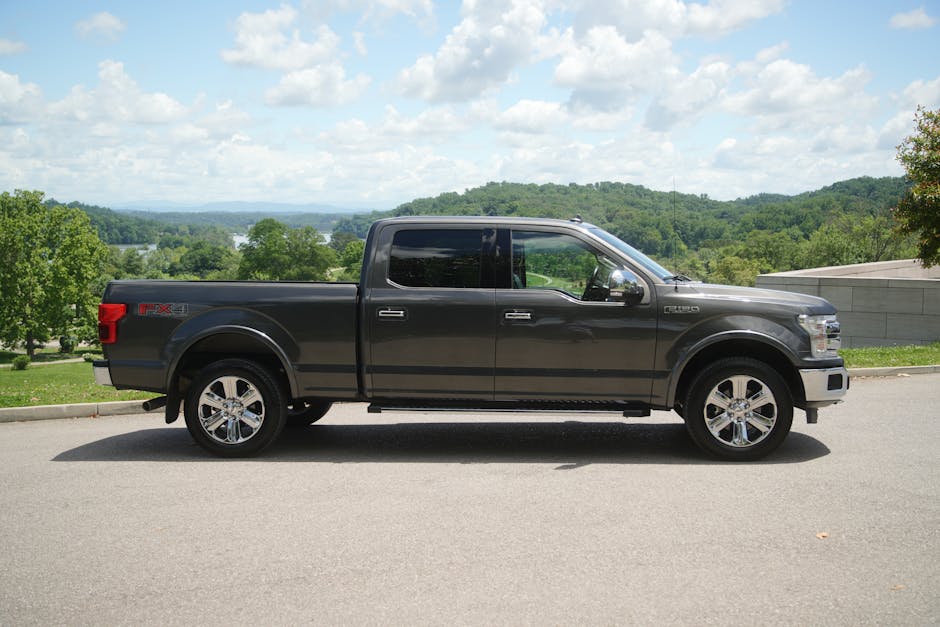
Walk through any truck accessory shop and you’ll see tonneau covers marketed as “low profile” sitting right next to standard models from the same brand. The price difference can be $50–$200, but the visual difference from ten feet away? Minimal. So what’s actually different between these two styles, and does the low-profile version justify its premium?
This is one of those truck accessory questions where the answer depends heavily on how particular you are about your truck’s appearance. For some owners, the difference between a cover that sits flush with the rails and one that sits half an inch above them is a deal-breaker. For others, it’s barely noticeable. I’ll lay out the practical differences so you can decide which category you fall into.
Products are available — click below to view them!
SEE DETAILSLow-profile tonneau covers sit flush with or slightly below the top of the bed rails, creating a sleek, aerodynamic look. Standard-profile covers sit on top of the rails, adding 1–3 inches of height above the bed line. The performance differences are minor — low-profile covers offer a slight aerodynamic advantage and a cleaner appearance, while standard covers are typically easier to install and more forgiving of bed rail imperfections.
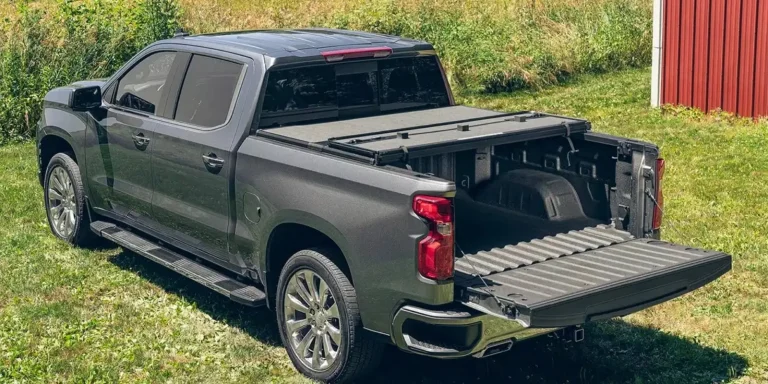
The difference comes down to where the cover sits relative to the bed rails. A standard tonneau cover mounts on top of the rails with its frame and fabric or panels sitting above the rail surface. When you look at the truck from the side, you can see the cover’s edge protruding above the bed rail line. It’s functional, visible, and unmistakable as an aftermarket addition.
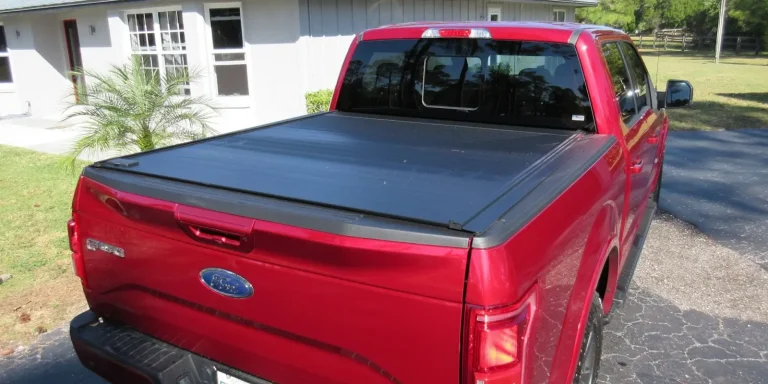
A low-profile cover mounts inside the rail channel or uses a thinner frame that sits flush with the top edge of the rail. From the side, the cover appears to be part of the truck’s body line rather than something bolted on top. The side view is cleaner, and the cover’s edge either matches the rail height exactly or sits just a fraction below it.
The engineering difference is mostly in the frame and mounting hardware. Low-profile covers use thinner, more precisely machined frames and often rely on inside-the-rail mounting rather than over-the-rail clamping. This demands tighter manufacturing tolerances, which partly explains the higher price. The materials are usually the same — it’s the geometry and machining precision that differ.
To visualize the difference, imagine looking at your truck from the side at eye level. With a standard cover, you see a distinct line above the bed rail — the cover creates a visible step up from the rail surface. With a low-profile cover, the bed rail and cover surface form one continuous line, as if the cover was part of the truck’s original body panel. It’s a subtle difference in measurement (usually less than an inch) but a noticeable difference in visual impression.
If the look of your truck matters to you — and for many owners it absolutely does — the low-profile design is more visually refined. The flush appearance makes the tonneau cover look like a factory-installed feature rather than an aftermarket add-on. On trucks with painted bed rails, the seamless look is particularly striking.
Standard covers aren’t ugly by any stretch. Plenty of them look good on the truck. But there’s a noticeable raised edge that anyone looking at the truck from the side or rear will spot. For some owners, that visible profile is a non-issue. For others, especially those who’ve invested in matching paint, custom wheels, and other aesthetic upgrades, the standard profile clashes with the rest of the build.
Photography and social media have amplified this distinction. If you regularly photograph your truck or share it online, the low-profile look is cleaner in images. The flush line reads as intentional and premium. The raised edge of a standard cover can look slightly industrial in photos, even though it’s perfectly fine in person. It’s a subtle thing, but truck enthusiasts notice it.
Color matching is another aesthetic consideration. Both profile types come in similar color options, but the low-profile design tends to blend better with the truck’s body color because there’s less visible edge to catch light differently from the surrounding panels. Standard covers can create a visible shadow line where the cover edge overhangs the rail, which can accentuate color differences between the cover and the truck body.
Low-profile covers have a measurable — though modest — aerodynamic advantage. By sitting flush with the bed rails, they create a smoother airflow surface across the truck’s profile. Air doesn’t catch on a raised edge and create turbulence above the bed. The practical impact on fuel economy is small: most testing suggests a 1–2% improvement over a standard cover at highway speeds.
Standard covers still improve aerodynamics compared to an open bed. The raised edge creates some turbulence, but far less than the vortex of recirculating air in an uncovered truck bed. The real-world fuel savings difference between low-profile and standard is measurable in a wind tunnel but largely undetectable at the gas pump.
Where the aerodynamic difference becomes slightly more relevant is in wind noise. A standard cover’s raised edge can generate a subtle whistle or humming at certain speeds, particularly on trucks with taller cab profiles where airflow drops sharply from the cab roof to the bed. Low-profile covers produce less of this turbulence-related noise. If you do a lot of highway driving and value a quiet cabin, the low-profile design contributes to a marginally quieter ride.
Standard covers are generally more forgiving during installation. The over-the-rail mounting system has more adjustment range, so minor variations in bed rail straightness, factory imperfections, or slight dents don’t prevent a secure fit. You clamp over the rail, adjust tension, and tighten down. There’s room for error.
Low-profile covers demand more precision. Inside-the-rail or flush-mount systems require the rails to be clean, straight, and free of obstructions. A dent in the rail, residual adhesive from old accessories, or a bed liner that’s slightly too thick at the rail edge can prevent proper installation. Some low-profile covers also have more specific torque requirements since the frame sits in a tighter space with less margin for adjustment.
Installation time is usually similar for both styles — 20–45 minutes depending on the brand and design. But low-profile installations involve more test-fitting and alignment checking to ensure the flush position is achieved across the full length of the bed. If one side sits perfectly flush but the other sits slightly above the rail, the visual benefit of the low-profile design is compromised — and you’ll notice it every time you walk past the truck.
For trucks with existing bed rail accessories — rail caps, bed liner edges, cargo management rails — low-profile covers may require removing or modifying these accessories to achieve a proper flush fit. Standard covers simply sit above whatever’s already on the rail. This is worth considering if your truck has a spray-in bed liner that extends onto the rail surface — the liner thickness can prevent a low-profile cover from sitting truly flush.
Standard covers often have a slight advantage in weather sealing because the over-the-rail design creates a natural overlap. The cover edge extends past the rail, directing water away from the bed interior. Combined with perimeter weather stripping, this overlap creates effective water shedding without relying entirely on the seal’s compression.
Low-profile covers rely more heavily on the quality of their weather stripping since there’s no overhang to redirect water. Premium low-profile covers compensate with dual-seal systems and integrated drainage channels. Budget low-profile models sometimes skimp on seals, and this is where you notice the difference during heavy rain. If weather protection is your primary concern, check the seal system carefully before choosing a low-profile cover — not all are equal.
In practical terms, the weather sealing difference between a quality low-profile cover and a quality standard cover is negligible. Both will keep your cargo dry in normal rain conditions. Where the standard cover’s overlap advantage shows up is in extreme conditions — driving rain, heavy snow melt, or sustained downpours. If you park outside in a climate with frequent heavy precipitation, the standard profile’s inherent water-shedding geometry is a small but real benefit.
Low-profile covers play nicer with bed rack systems, cab-mounted accessories, and load bars because they don’t extend above the rail line. If you’re building out a truck with roof-level storage, a low-profile cover keeps the bed surface clear and doesn’t interfere with accessory mounting positions. This is particularly relevant for overlanding builds where every accessory needs to integrate cleanly with the others.
Standard covers can conflict with some accessories that expect a clear rail-top surface. Bed racks that clamp onto the rail may need spacers or modified mounting hardware to work with a standard cover’s frame sitting between the rack and the rail. Check accessory compatibility charts before committing to either style if you plan to add racks or rails later.
Tonneau cover-mounted accessories — like T-slot rails for crossbars — are available on both profile types. However, low-profile covers with integrated T-slots maintain their flush appearance even with rails installed, while standard covers with T-slots sit even higher above the bed rail line. If you’re planning an accessory-heavy build, the low-profile foundation gives you cleaner integration options.
The low-profile premium varies by brand but typically adds $50–$200 to the price compared to the standard version of the same cover. For soft roll-up covers, the difference might be $30–$80. For hard folding and retractable covers, the gap widens because the precision manufacturing cost scales with cover complexity.
Whether the premium is worth it depends entirely on how much the aesthetic difference matters to you. The functional performance gap is narrow — a standard cover protects your cargo just as effectively as a low-profile version. You’re primarily paying for a cleaner look and marginally better aerodynamics. For truck owners who view their vehicle as a statement piece, the premium is easily justified. For truck owners who view their vehicle as a tool, the standard profile saves money without sacrificing protection.
Resale value is one area where low-profile covers may recoup some of their premium. A flush-mount cover on a well-maintained truck signals attention to detail that buyers notice, particularly on premium trims. The cover itself may sell for more in the aftermarket too, since low-profile models are in higher demand. But this is a minor factor — don’t buy a low-profile cover as a financial investment.
Not really. The frame design, mounting hardware, and seal systems are different between standard and low-profile versions. Modifying a standard cover to sit flush would require custom fabrication and would likely compromise weather sealing. If you want a low-profile look, buy a cover designed for it from the start.
Minimally. A low-profile cover sits at or below the rail line, giving you the full interior bed depth. A standard cover sits above the rail, which technically adds a small amount of covered space above the rail line — you can fit items that protrude slightly above the rail under a standard cover. The difference in usable cargo volume is negligible in practice.
When closed, both profiles are visible in the rearview mirror. When open (folded or rolled), low-profile covers may sit slightly lower and be less visible in the mirror, depending on the specific model. This isn’t a safety concern — you should be checking all mirrors and using reverse cameras regardless of what’s behind the cab.
Yes, but the liner needs to be applied correctly around the rail area. A thick liner buildup on the inner rail edge can prevent a low-profile cover from seating flush. If you’re getting a spray-in liner and planning to install a low-profile cover, tell the liner installer so they can tape off or thin-coat the rail areas where the cover mounts.
Low-profile covers have a slight aerodynamic advantage when towing because the flush surface creates less turbulence in the airflow between the cab and the trailer. In practice, this difference is small enough that it shouldn’t influence your buying decision for towing purposes. Both profile types improve aerodynamics over an open bed when towing.
If you prioritize a factory-look appearance and plan to add bed rack accessories, a low-profile cover is the right call. If you want reliable protection at a lower price and aren’t concerned about a slightly raised edge, a standard cover delivers the same functional performance without the premium. Either way, you’re protecting your cargo and improving your truck’s overall look — the profile choice is about dialing in your personal preference, not making or breaking the cover’s effectiveness.