Address
2949 Boundary Street
Jacksonville, FL 32202
Work Hours
Monday to Friday: 7AM - 7PM
Weekend: 10AM - 5PM
Address
2949 Boundary Street
Jacksonville, FL 32202
Work Hours
Monday to Friday: 7AM - 7PM
Weekend: 10AM - 5PM
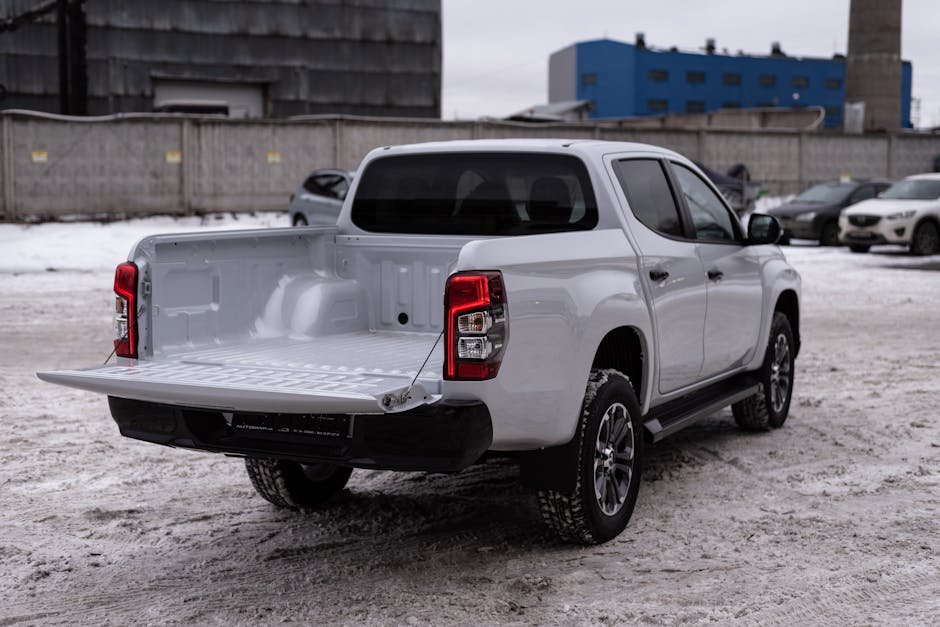
There comes a time in every truck owner’s life when the tonneau cover needs to come off — whether you’re hauling oversized cargo, doing bed maintenance, switching to a different cover, or selling the truck. Removing a tonneau cover isn’t complicated, but doing it carelessly can scratch your bed rails, damage the cover, or leave you struggling with a 60-pound panel that’s suddenly harder to manage than you expected. Here’s how to remove every type of tonneau cover safely and without drama.
I’ve removed covers dozens of times across different trucks and cover types. The process is straightforward once you know the sequence, but first-timers often skip steps that prevent damage — particularly the protective padding and the two-person lift for heavier covers. Take the extra five minutes to do it right, and both your truck and your cover will be fine.
Products are available — click below to view them!
SEE DETAILSOpen the cover fully, release all mounting clamps starting from the tailgate end, and lift the cover off the bed rails — don’t slide it. For hard covers weighing over 40 pounds, use a helper. Lay protective blankets on the bed rails before sliding anything. The entire process takes 10–30 minutes depending on cover type. Store the cover flat in a clean, dry location.
Gather what you need before touching the cover: a socket wrench or the hex key that came with your cover (most clamps use 3/8″ or 1/2″ hardware), a Phillips or flat-head screwdriver if your cover uses screw-type clamps, moving blankets or thick towels to protect bed rails, and a flat storage area large enough to lay the cover down.
If your cover has been installed for more than a few months, the clamps may be corroded or seized. Have a can of penetrating lubricant (PB Blaster or WD-40) ready in case clamp bolts resist. Forcing a seized bolt can strip the threads or crack the clamp body — penetrating lubricant and patience are cheaper than replacement hardware.
Photograph your cover’s mounting positions before removing anything. Note which clamps are in which positions and how the cover sits relative to the bed rails. When you reinstall (or install a different cover), these reference photos save significant alignment time.
Soft roll-ups are the easiest covers to remove because they’re lightweight and have simple mounting systems.
Step 1: Roll the cover fully toward the cab and secure it with the strap.
Step 2: Release the tailgate-end latch assembly. On most roll-ups, this involves removing two bolts or loosening two clamps that secure the latch bar to the bed rails.
Step 3: Working from the tailgate toward the cab, loosen and remove each side rail clamp. Most roll-ups have 4–6 clamps per side. Loosen all clamps before removing any — this prevents the cover from shifting and binding on partially released clamps.
Step 4: With all clamps released, lift the entire cover assembly (frame, fabric, and rails) off the bed. A soft roll-up typically weighs 15–25 pounds, so this is a comfortable solo lift. Set it down on a flat surface away from traffic.
Step 5: Inspect the bed rails for any marks or adhesive residue from the clamp pads. Clean with isopropyl alcohol if needed. Total time: about 10–15 minutes.
Hard tri-folds are heavier and require more care during removal to avoid scratching the bed rails or damaging the cover panels.
Step 1: Fold all panels toward the cab into the stacked position. Secure them with any provided straps.
Step 2: Place moving blankets or thick towels over the bed rails on both sides. This protects the rail finish when you lift the cover off and prevents panel edges from scratching the rails during removal.
Step 3: Release all mounting clamps, working from tailgate to cab on both sides simultaneously (or alternating sides). Don’t remove clamps from one side completely before the other — this can cause the cover to shift and bind.
Step 4: With all clamps released, lift the cover straight up off the bed rails. A hard tri-fold weighs 50–75 pounds depending on size. For covers over 50 pounds, have a helper — one person per side. Lift evenly to avoid flexing the hinge joints, which can misalign the panels.
Step 5: Carry the cover (don’t drag it) to your storage area. Lay it flat with the panels unfolded — storing a tri-fold in the folded position for extended periods can stress the hinges. Place something soft underneath to protect the finish. Total time: about 15–25 minutes.
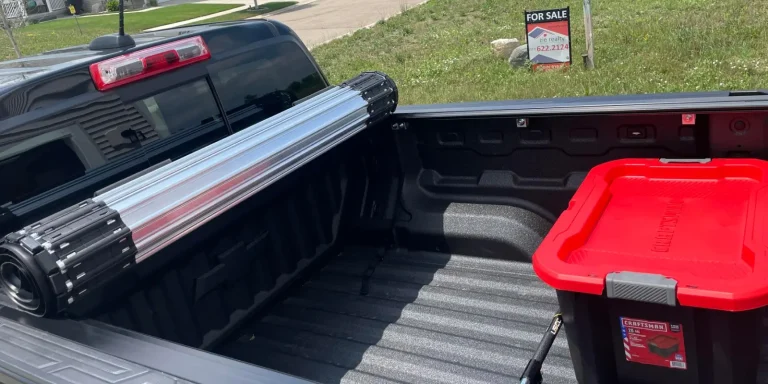
Retractable covers are the most involved to remove because of the rail system and canister. Plan for 30–45 minutes and definitely have a helper for the canister removal.
Step 1: Fully retract the cover into the canister and lock it.
Step 2: Disconnect any electrical connections if you have a powered model. Locate the wiring harness connector (usually near the cab end) and disconnect it. Secure the truck-side connector to prevent it from dangling or shorting.
Step 3: Remove the rail tracks. Rails are typically secured with bolts along the bed rail — 6–10 bolts per side depending on the model. Remove all bolts and lift the rails off the bed rails. Set them aside.
Step 4: Remove the canister. The canister is the heaviest component — 25–40 pounds on its own — and it’s in an awkward position at the cab end of the bed. Have one person support the canister while the other removes the mounting bolts. Lift the canister straight up and out of the bed. Don’t let it rest on or drag across the bed rails.
Step 5: Inspect the bed rails for bolt holes, adhesive residue, or marks from the rail mounting hardware. Retractable cover rails sometimes leave small screw holes in the bed rail — these are cosmetic and can be filled with touch-up paint if desired. Total time: about 30–45 minutes.
Sliding instead of lifting: The most common damage during removal comes from dragging the cover across the bed rails instead of lifting it clear. Even a few inches of sliding creates scratches on painted rails. Always lift straight up with a helper on the other end. If solo, place moving blankets on the rails before any repositioning.
Removing clamps from one side only: Loosening all clamps on one side before touching the other lets the cover drop and pivot on the remaining clamps, potentially bending the frame or scraping the rail. Alternate sides — loosen one clamp on the left, then one on the right, working from tailgate to cab.
Forgetting to disconnect electrical: Powered retractable cover owners sometimes try to lift the canister without disconnecting the wiring harness, yanking the connector or breaking wires. Always locate and disconnect the electrical connection before physical removal.
Not every situation that seems to require cover removal actually does. Here’s a guide to when removal is genuinely necessary versus when you can work around it:
Removal IS necessary: Hauling items taller than the bed (furniture, appliances, equipment). Installing a different cover or bed accessory that occupies the same mounting space. Bed rail maintenance, painting, or repair. Selling the cover separately from the truck. Long-term storage of the truck where the cover serves no purpose.
Removal is NOT necessary: Hauling items that fit within the bed depth (fold, roll, or retract the cover instead). Car washes (keep the cover closed). Bed cleaning (most maintenance can be done with the cover folded open). Towing (covers don’t interfere with trailer hitches except fifth-wheel setups). Installing most bed accessories (tie-downs, mats, lights) that mount below the rail line.
If you find yourself removing and reinstalling the cover frequently, consider whether a different cover type would serve your needs better. Soft covers that remove in 10 minutes are more practical for frequent removal than hard covers that take 30 minutes. Retractable covers that fully retract into the canister rarely need removal at all — the retracted position clears the bed for most hauling scenarios.
Soft covers: Store loosely rolled or flat — never tightly folded, as this creates permanent creases in the vinyl. Keep in a dry, temperature-controlled space if possible. Excessive heat causes vinyl to become pliable and deform under its own weight. Cold causes brittleness. A garage or basement at room temperature is ideal.
Hard folding covers: Store flat and unfolded. If space doesn’t allow flat storage, store folded but alternate the fold direction every few weeks to prevent hinge stress. Place soft padding between panels to prevent finish-to-finish contact that can cause scratching. Cover with a sheet or tarp to prevent dust accumulation.
Retractable covers: Store the canister and cover together in the retracted position. Store the rail tracks separately, wrapped in protective material to prevent scratching. Keep all mounting hardware in a labeled bag taped to the canister so nothing gets lost.
All types: Keep mounting clamps, bolts, and hardware organized in a ziplock bag labeled with the cover brand, model, and truck fitment. If you sell the cover separately from the truck, complete hardware makes the sale easier and the price higher.
Many situations that seem to require cover removal can actually be handled by folding or retracting the cover. Full removal is only necessary when you need the bed completely clear of all hardware — for example, when installing a different cover, when the mounting clamps need to come off for bed rail maintenance, or when the cover needs repair or replacement.
For hauling oversized items, folding a tri-fold against the cab or fully retracting a retractable cover usually provides sufficient bed space without complete removal. Rolling up a soft cover gives you full bed access with the cover still mounted. Complete removal should be the last resort, not the first response to needing more bed space.
Soft covers: yes, easily — they weigh 15–25 pounds. Hard folding covers: possible but easier with a helper if the cover weighs over 50 pounds. Retractable covers: a helper is strongly recommended due to the awkward canister weight and rail removal process. When in doubt, recruit a friend — the extra person prevents both cover damage and back strain.
Possibly. Clamp contact points may show minor impressions or scuff marks, especially after long-term installation. These marks are cosmetic and don’t affect the truck’s structural integrity. To minimize marks, use protective tape or film during installation, and clean and touch up any visible marks after removal.
Wipe the rails with a damp cloth to remove dirt and debris from the clamp contact areas. If adhesive residue from clamp pads remains, use isopropyl alcohol or an automotive adhesive remover. Inspect for any paint damage and apply touch-up paint if needed. This is also a good time to wax the bed rails for protection.
Absolutely. Used tonneau covers in good condition sell well on marketplace platforms, especially popular models from BAKFlip, TruXedo, Retrax, and Extang. Include the brand, model, truck fitment (year, make, model, bed length), condition, and all mounting hardware in the listing. Pricing typically runs 40–60% of new retail for covers in good condition.